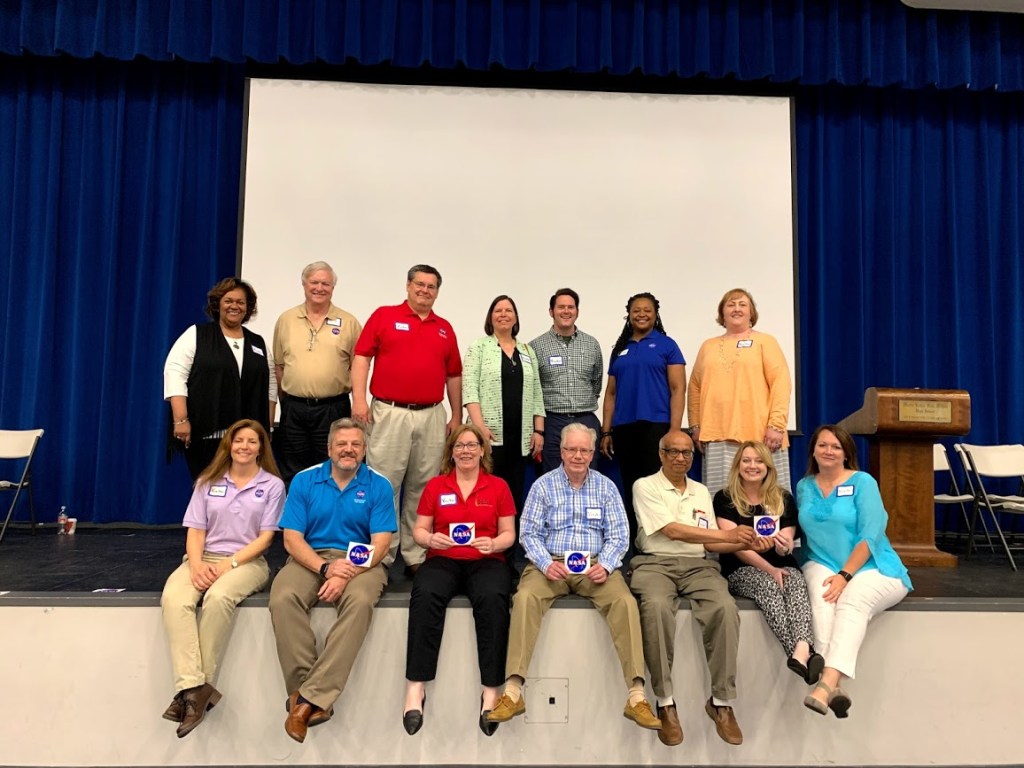
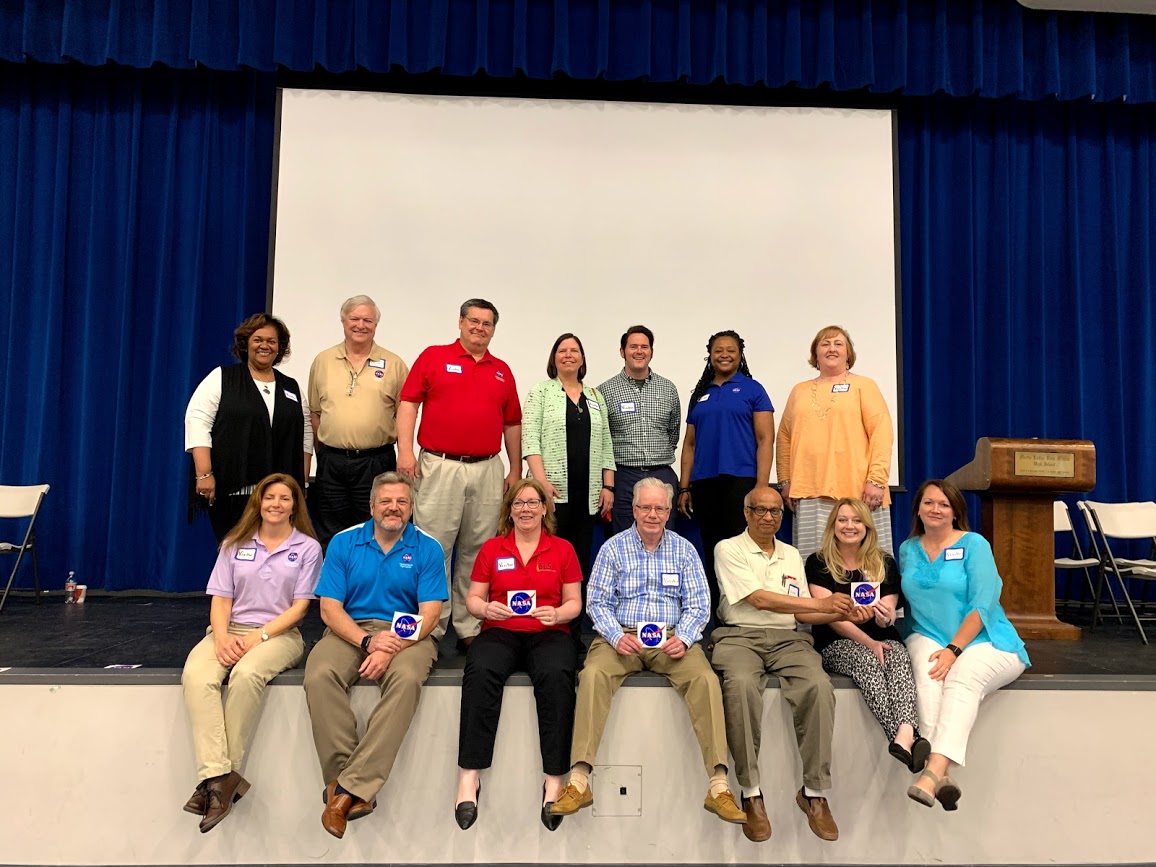
A group of scientists and engineers working at the Marshall Space Flight Center of the National Aeronautics and Space Administration (NASA) visited MLK Magnet this past Thursday. Touring schools in Tennessee, these employees have been speaking to students and sharing the renewed goals of NASA; this specific center specializes in propulsion and space station design. NASA strives to colonize space exploration and dominate the grand expanse of deep space.
Students in engineering and science classes were invited to listen to this presentation by NASA Marshall Space Flight Center (MSFC), located in Huntsville, Alabama. Fourteen NASA engineers, scientists, and directors explained the monumental leaps and aspirations of new technology, such as the Space Launch System (SLS). Different department directors explained their role in developing the SLS. Focusing on propulsion for the SLS, the MSFC is pioneering new technology for the progress of NASA and American space ingenuity.
Mary Beth Koelbl, Deputy Department Manager of the Propulsion Systems Department, describes the NASA’s role in aiding SpaceX, an independent American airplane transportation and manufacturing company. After developing the propulsion, methane engine, and tank system, NASA decided to give that technology to the aeronautics industry and to SpaceX in their Merlin rocket engines. Koelbl says NASA is helping SpaceX with low earth technology so that NASA can focus on higher space exploration.
During the question and answer session, Lisa Watson-Morgan, associate director of operations in the Engineering Directorate, argued the motives and reasoning for costs for space exploration. Because of the U.S’ “visceral need to explore” and “thirst for knowledge,” NASA is determined to engage in deep space exploration. For example, the James Webb Space Telescope, planned to launch in 2021 and succeed the Hubble Space Telescope, will have a tennis court sized heat shield which will look for the first instance of time. Watson-Morgan believes the shift from low earth technology like the International Space Station and satellites near earth orbit to a more competitive, grander scale. In order to protect America’s assets and national pride of being “first,” space exploration is important and necessary.
Also, the cost of the entire NASA program in relation to the U.S budget is less than one-half of one cent, according to Larry Leopard, director of the Engineering Directorate.
MLK junior Gemma Orton asked whether this branch of NASA was involved in the Mars One Project, an extensive project seeking to create a permanent settlement on Mars. The MSFC says they will work on the nuclear thermal rockets for the rocket that will be launched to Mars. They will also offer life support and research the kinds of habitats, radiation, and efficient air and water needed for humans living on Mars.
The lasting impact of NASA’s work is improvement in common technology, including our cellular devices, satellites, and GPS, as space technology advances. NASA also strives to be the international leader in space exploration and cultivate an eternal cycle of improvement and creativity.
The MSFC will visit Tennessee State University in Nashville after this presentation.
 i am melina